


Synthesis and Process Intensification and Scale-up
PSI has extensive background knowledge in chemical and material synthesis, having developed several processes from the benchtop to pilot-plant scale. These experiences have allowed us to build out our scale-up and process intensification capabilities. These capabilities include a 1,500 ft² state of the art organic and polymer synthesis laboratory where a large variety of materials are produced. Fine organic chemicals, including monomers and polymers, can be synthesized and characterized in house on a multi-gram scale. Equipment for the safe synthesis of energetic materials, including protocols, and barriers, is a part of the synthesis lab. PSI is uniquely qualified to help you analyze, characterize, improve, and scale-up your process through rigorous intensification.
Overview of Process Intensification
Process intensification is an important step during the scale-up process for any chemical commercialization effort. It seeks to optimize the synthesis process through a large number of improvements. Some examples include:
• Switching from batch to continuous processing
• Implementing alternative technologies such as using a membrane to shift reaction equilibriums to boost yields
• Combining unit operations into a single operation such as using a reactive distillation to perform both chemical reaction and separation simultaneously
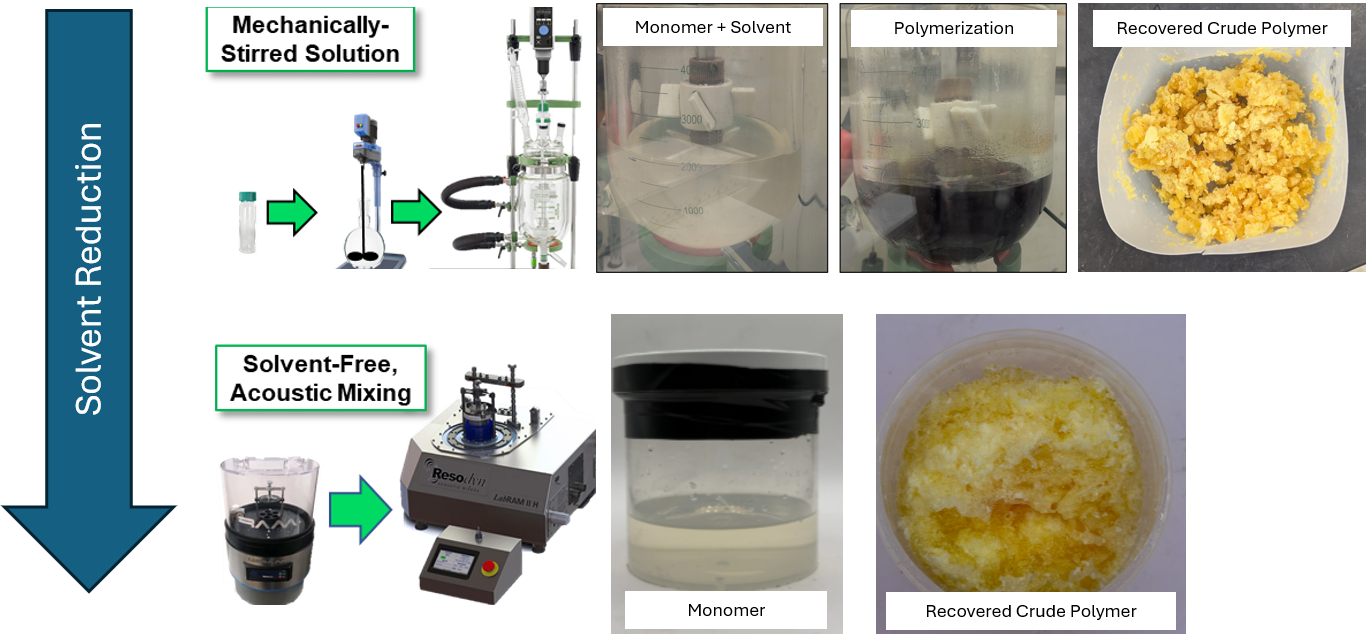
PSI designed and demonstrated intensification process for the removal of solvent from a polymer production process.
Key features:
• Reduced capital and operating costs
• Improved energy and resource efficiencies
• Improving safety and reducing risk
• Lowering environmental impact
• Enabling increased performance through efficiency gains
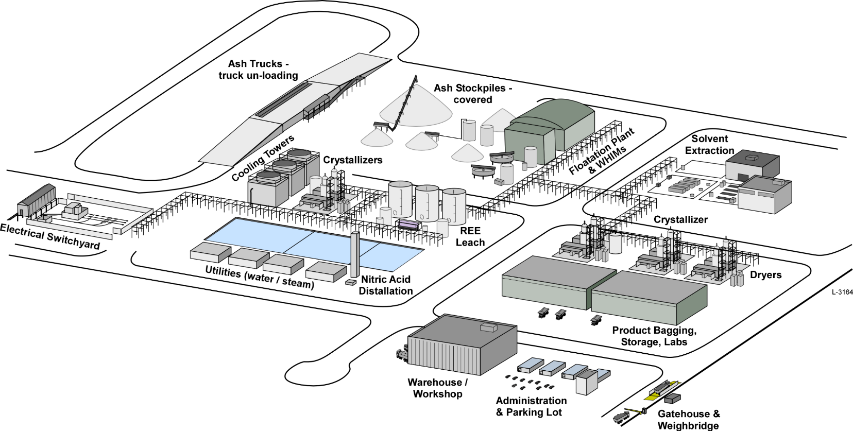
PSI preliminary plant design for a rare-earth recovery process.
Benefits:
• Enhanced Mass & Heat Transfer: Techniques like microfluidics, ultrasonic fields, or intense mixing create extremely thin boundary layers, dramatically speeding up reaction and separation rates.
• Improved Product Quality & Selectivity: Precise control over residence time distribution and mixing leads to more consistent products and better control over reaction pathways (e.g., minimizing unwanted side reactions).
• Flexibility & Modularity: Modular and easily reconfigured or rearranged, units allow for multi-product plants or continuous manufacturing of smaller batches (mass customization).
• Smaller Hazard Inventory: Because reactors and hold-up volumes are drastically reduced, the amount of hazardous, flammable, or toxic material present at any given time is minimized, significantly lowering the consequences of leaks or runaway reactions.
• Waste Minimization: Higher selectivity and conversion rates mean fewer byproducts and unreacted materials to treat or dispose of.
Case Studies:
REE Pilot Plant
Under internal research and development (IRAD) and small business innovation research (SBIR) funding, a PSI team developed a unique process to extract rare earth elements from coal ash, an abundant waste material produced in coal fire power plants. There are billions of tons of coal ash landfilled in the United States. A key feature of the PSI process is the rehabilitation of landfilled coal ash to produce a viable cement substitute material.
As a part of this effort, the PSI team has worked with several university, utility and commercial collaborators (including Winner Water Services) to construct and operate a pilot plant that demonstrates the PSI process. The plant was first commissioned in 2020, and as of 2022 processes a half ton per day of coal ash. The output of the plant is a rare earth concentrate that achieves greater than ninety percent purity.
This one-of-a-kind plant was a first for PSI, in that we took a chemical process performed in beakers and test tubes, and brought it all the way to the pilot scale. The next steps are to work with our government, academic, utility, and commercial partners to scale-up the process further, remediate many tons of coal ash, and produce as much rare earth material as possible.
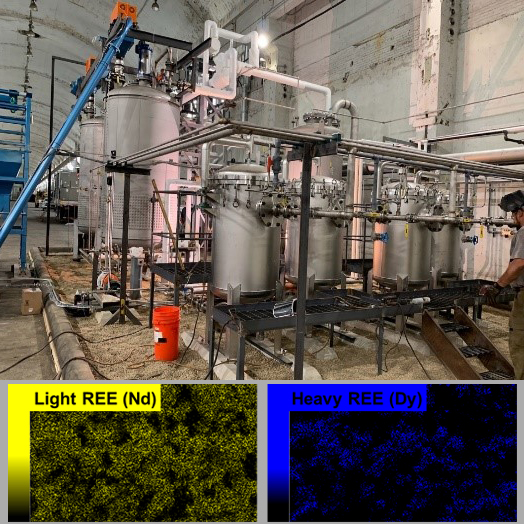
Top: REE Pilot Plant. Bottom: SEM-EDX images of REE materials produced using the PSI process.
Microreactor
PSI has designed and constructed continuous microreactor systems and have utilize these microreactor units to synthesize propellant ingredients and advanced sorbents.
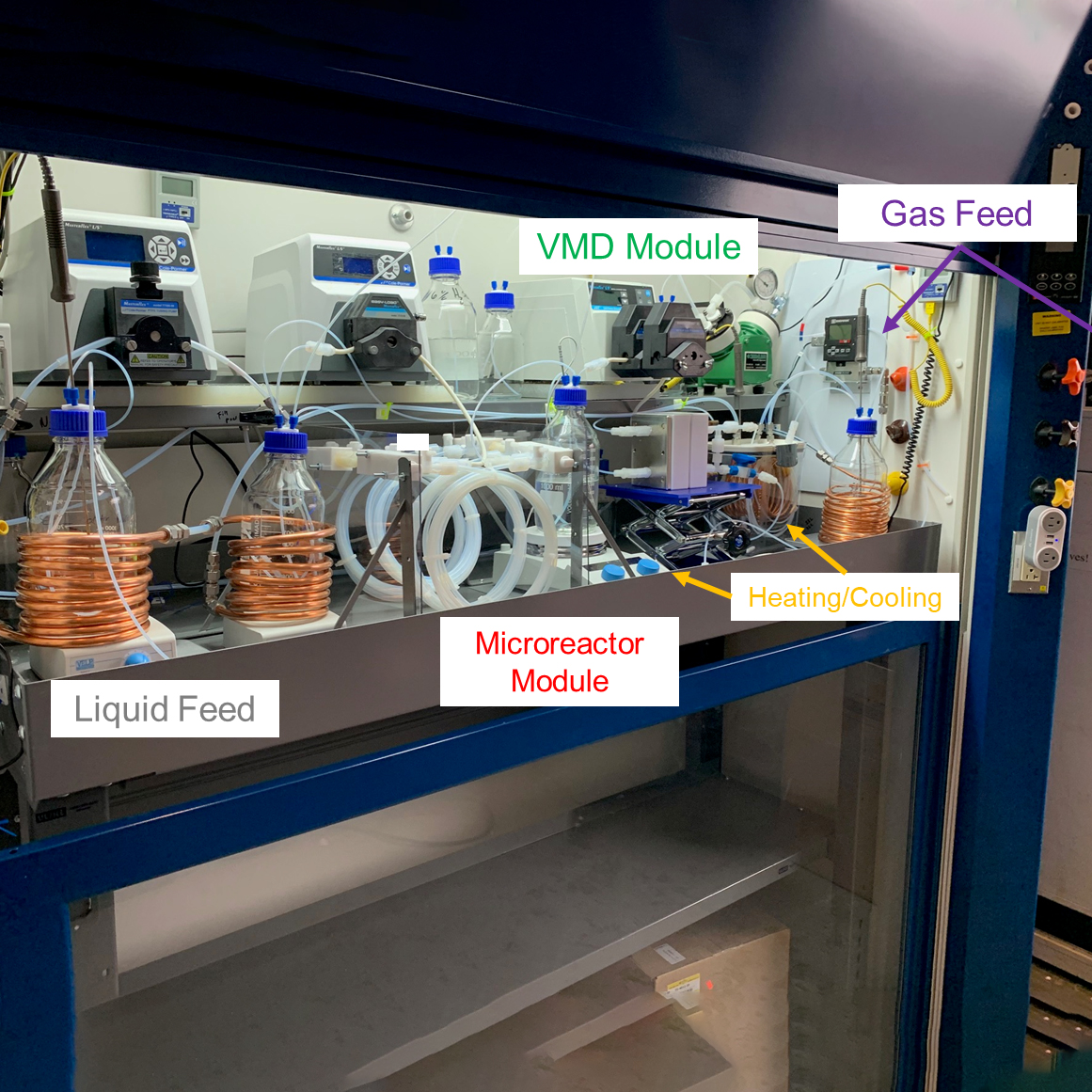
PSI Microreactor Production System